RomeReal life first.

Rome gives the connections that almost happened a second chance.

Rome Discovery screen with nearby Bluetooth controls.Rome Match screen where a person can privately choose whether to connect.

The problem

Meeting people isn’t always the problem.
The moment afterward is.

“I should have asked.”
“Would it have been weird if I said something?”
“Maybe I’ll see them next week.”

The insight

The connection already happened.

Rome helps a real-world connection survive the moment instead of helping people browse strangers.

How Rome works

Real-world context in. Private choice out.

  1. 01

    Encounter

    Bluetooth proximity or a shared event establishes real-world context.
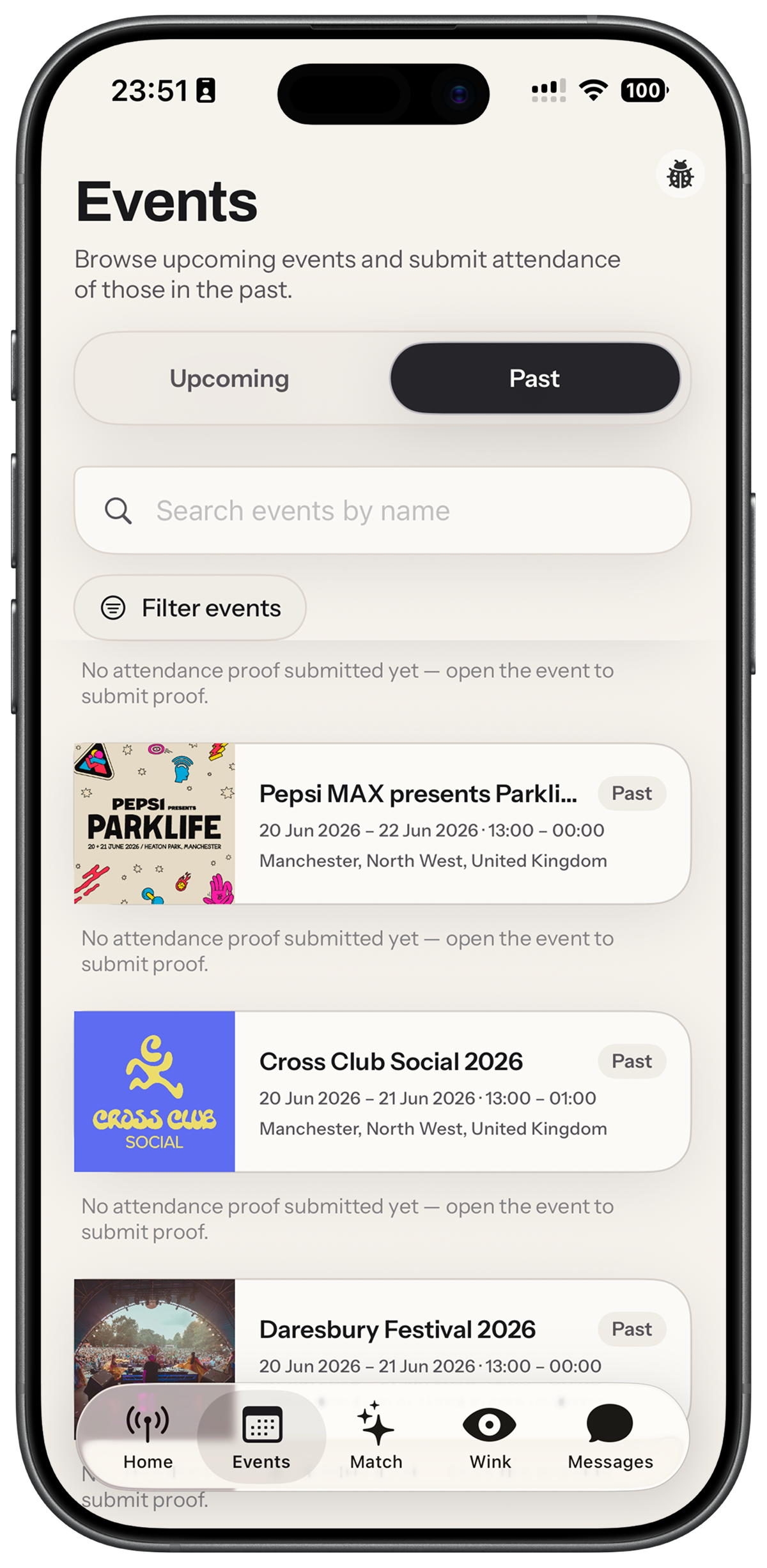
    Rome Events screen showing past and upcoming events.
  2. 02

    Review

    Each person privately decides whether they want to reconnect.
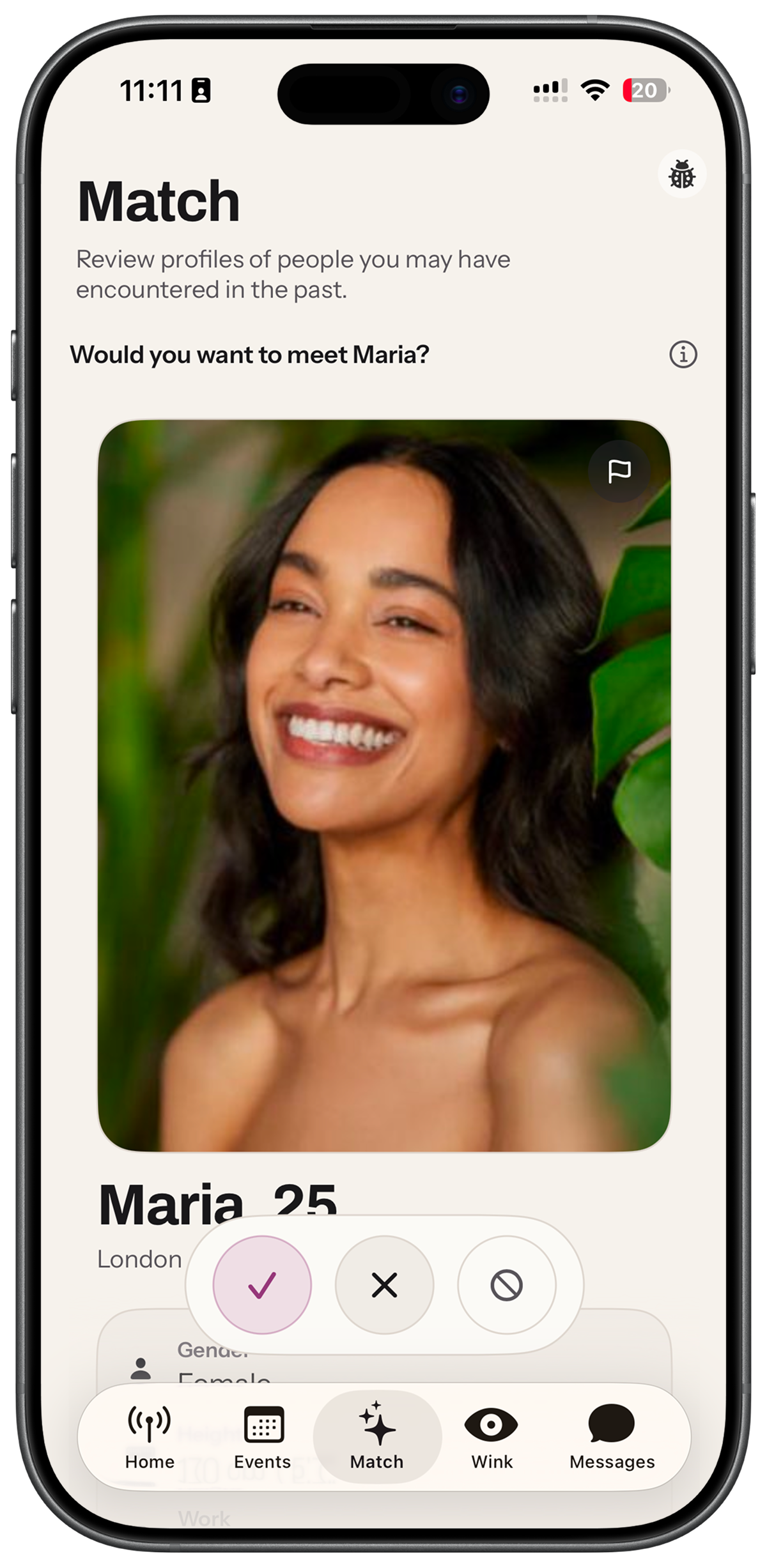
    Rome Match screen where a person can privately choose whether to connect.
  3. 03

    Mutual reveal

    Only mutual interest opens a conversation.
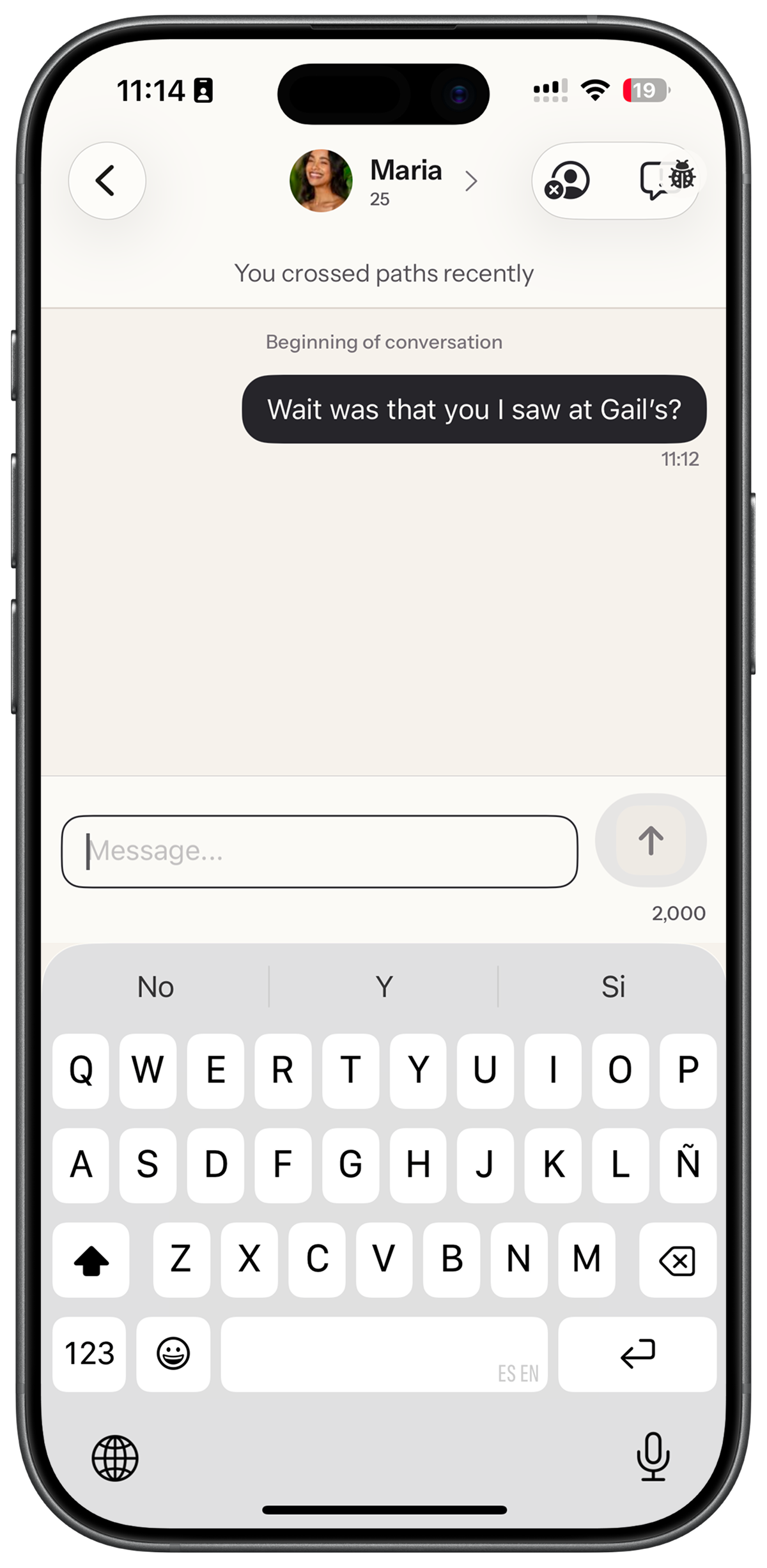
    Rome chat screen opened after a mutual connection.

Initial wedge

Start where real life repeats.

Rome is currently focused on building user density in communities such as run clubs and gyms, where social interaction is common but exchanging details can feel awkward.

Festivals, concerts, hobby groups, and hackathons are areas Rome would like to explore over time.

Vision

Technology should help real moments continue, not replace them.

A private social layer around real life.

Current stage

Built, launched, learning.

Rome is live on iOS and Android. Bluetooth and event flows exist today.

Platforms
iOS and Android
Availability
United Kingdom, Ireland, Portugal, South Africa
Context
Bluetooth proximity and shared events

Founder

Let’s help real life win.

James Owen

Founder & Principal Engineer

Rome is live on iOS and Android.

James Owen, Founder and Principal Engineer at Rome.

The obligatory AI slide

Fine. One slide on AI.

Rome is not an AI product. AI has almost nothing to do with helping people reconnect in real life. Turning Rome into one would defeat the point.

Not the product

No AI companions. No generated chemistry. No attempt to automate being human.

Behind the scenes

We use AI agents for repetitive build, test, support, and operations work, so a small team can stay lean.

The result is a lean team, low burn, and a longer runway to learn before Rome has to monetise.